Non-verbal communication
Non-verbal communication includes all behavioral signals between interacting individuals exclusive of verbal content. While estimates vary, it is suggested that 80% of our communication is non-verbal and that our feelings and emotions are communicated to another person through the non-verbal pathways while what we say has to do with what we are thinking. In most instances the communication of our feelings and emotions is involuntary and at times out of our control.
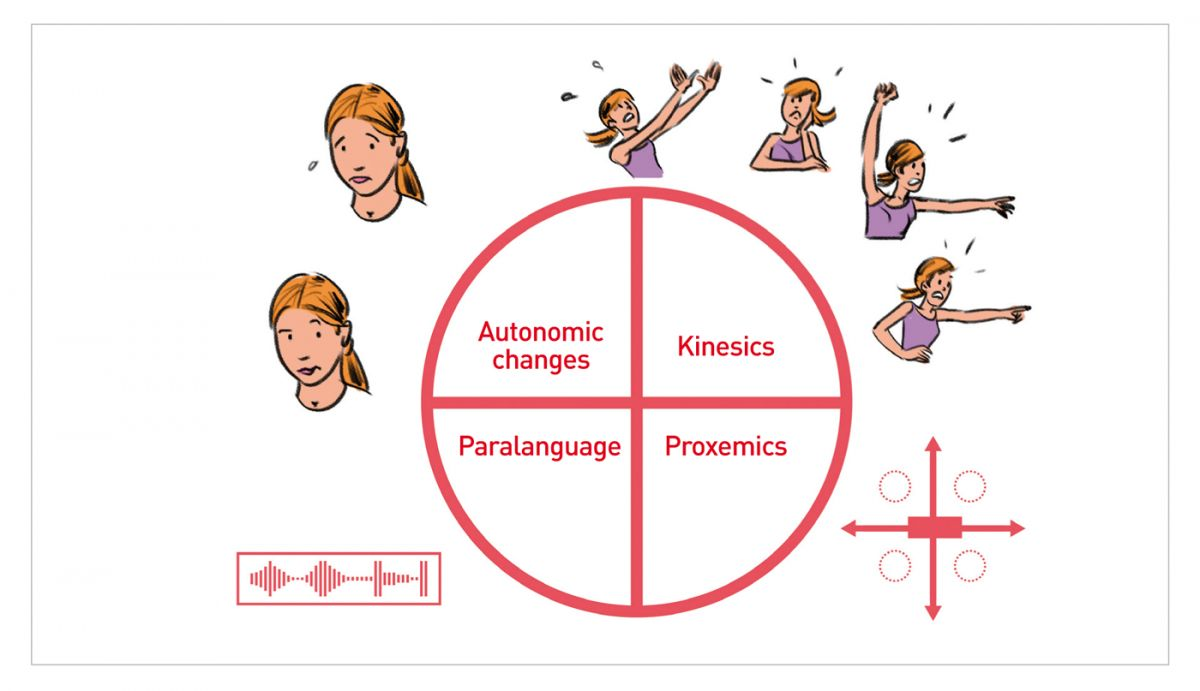
There are four categories of non-verbal communication (Figure 1) [1]:
- Kinesics
- Proxemics
- Paralanguage
- Autonomic changes
Kinesics
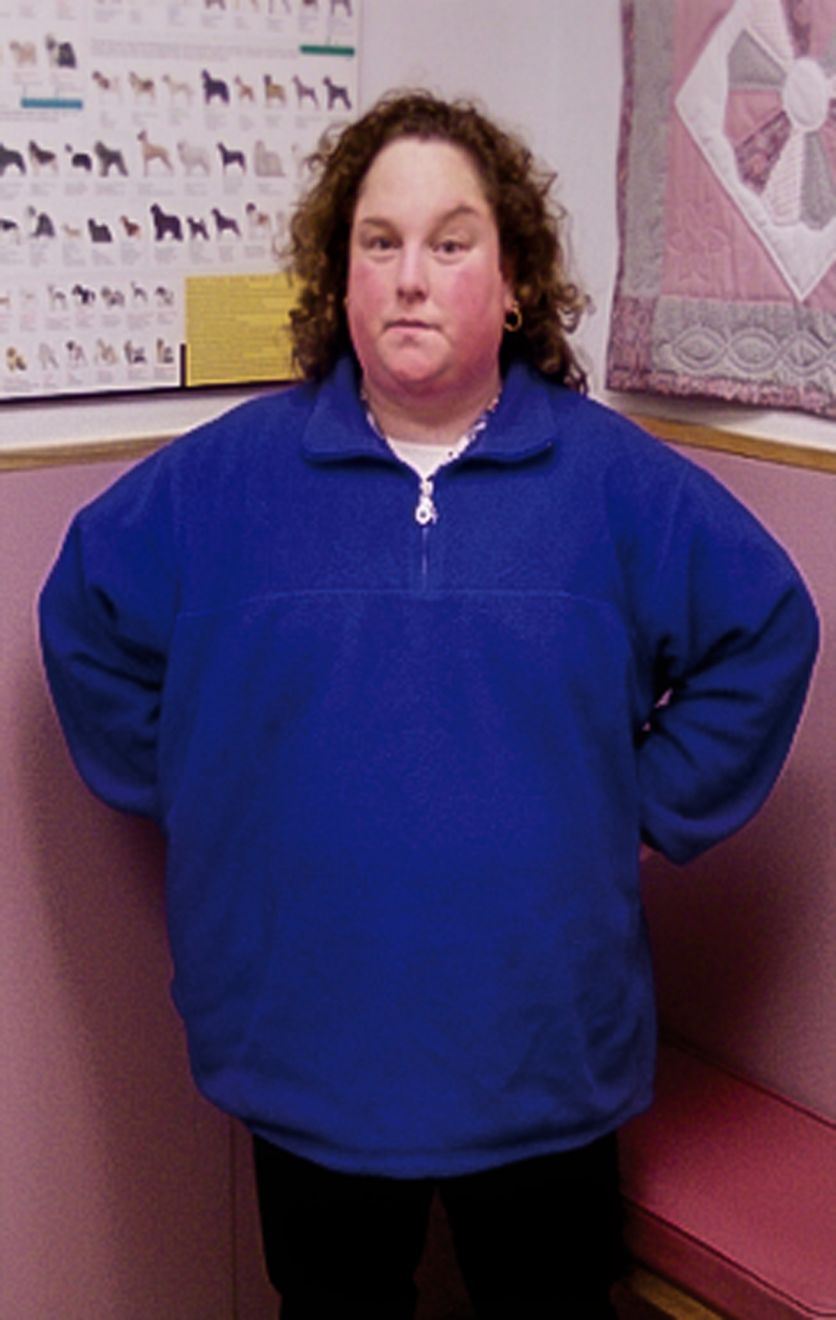
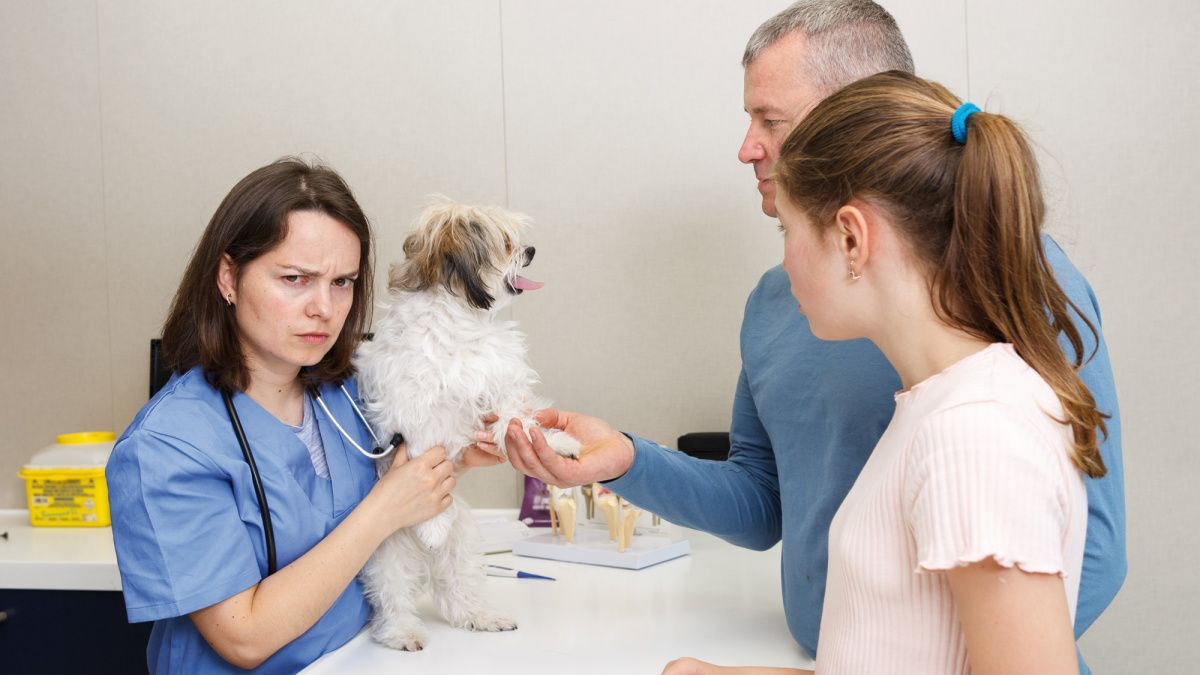
Kinesics refers to behaviors such as facial expressions, general level of tension in the body, gestures, body posture and movement. These are typically non-verbal behaviors over which we have some degree of voluntary control (Figure 2).
Exercise 1
- What do you notice about the client’s body posture and facial expressions?
- What are some assumptions that you are making about how she is feeling?
- What can you do or say to check out your assumptions?
[At the end of this section you will find some answers to these questions]
Proxemics
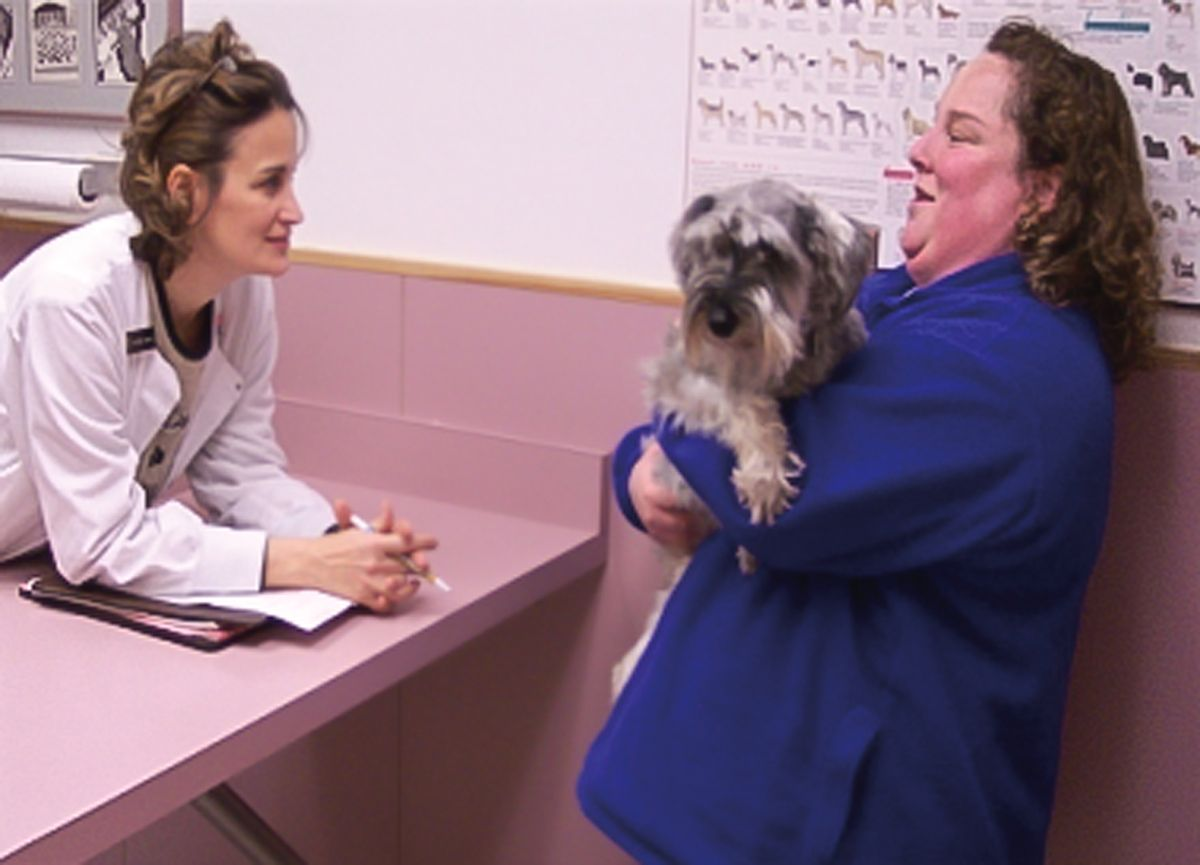
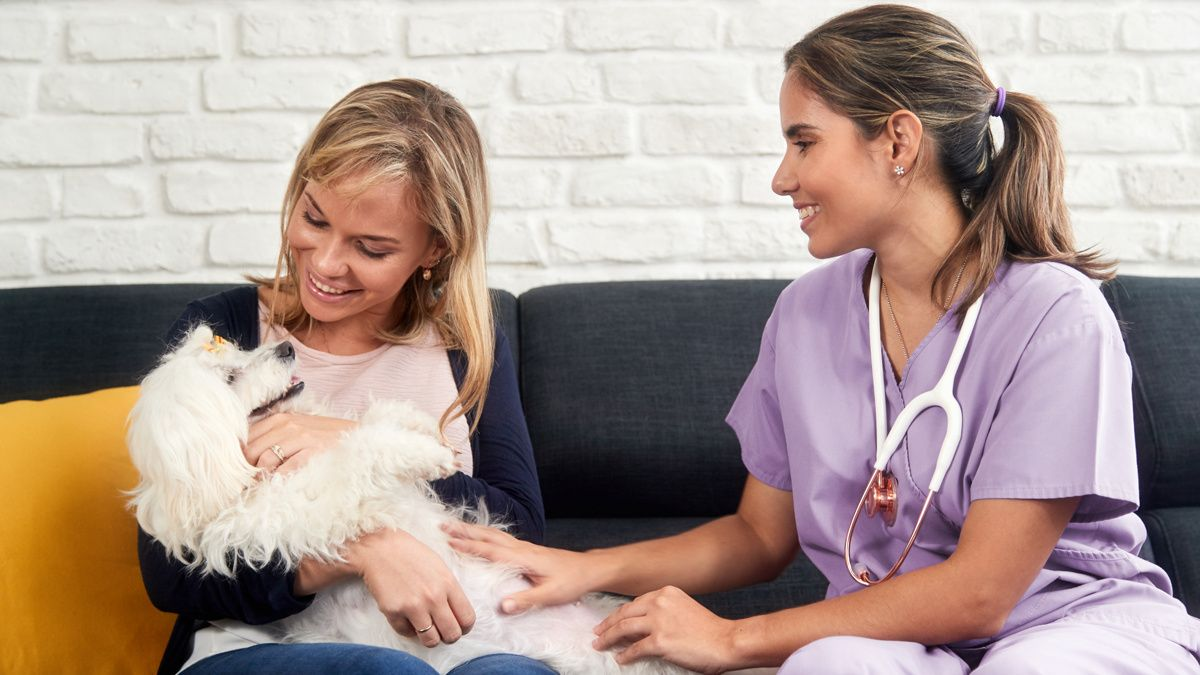
Proxemics refers to how people arrange themselves spatially including the distance between the veterinarian and client, the angle that the veterinarian positions himself in relation to the client, vertical height differences, and physical barriers such as charts, exam tables, computers and even the animal itself (Figure 3).
Exercise 2
- What kind of information is being exchanged between the client and vet practitioner?
- What assumptions can you make about how the client is feeling based on her non-verbal communication?
- What can you do to address what you are seeing from her non-verbal communication?
[At the end of this section we’ll provide some answers to these questions]
Paralanguage

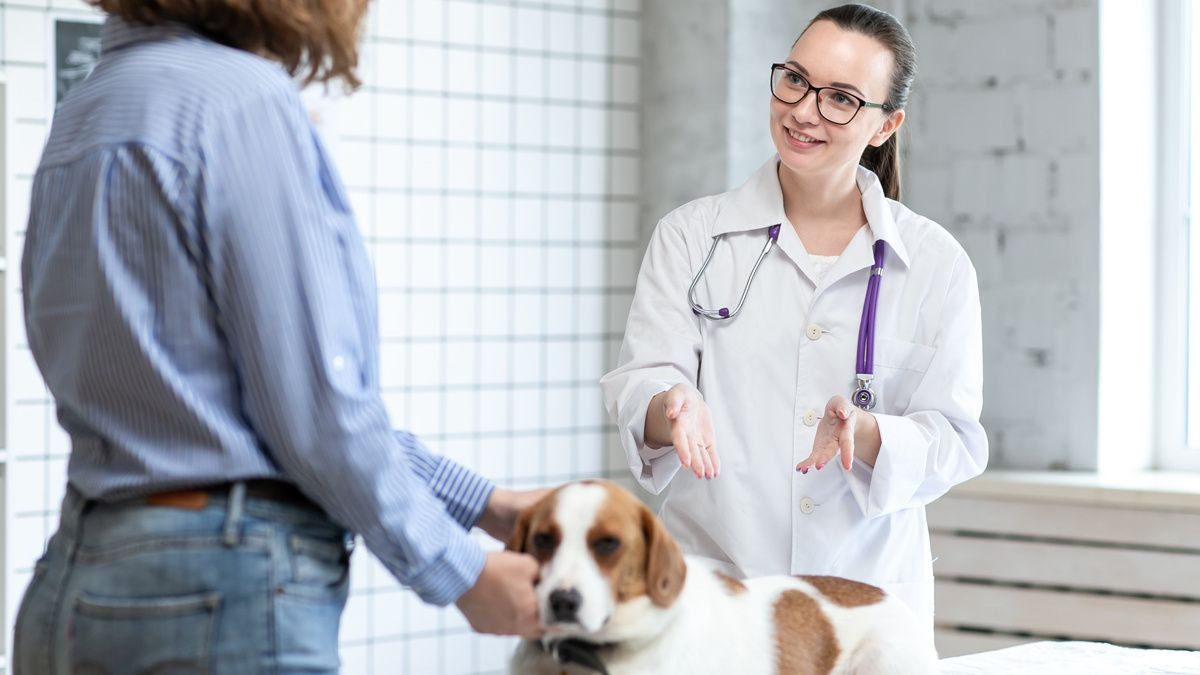
Paralanguage includes all the qualities of the voice: tone, rate, rhythm, volume, and emphasis (Figure 4). We use these qualities to deliver quite different messages with the same words: I am going to work now; vs. I am going to work now; vs. I am going to work. Note that there are cultural differences. Some cultures emphasize tone and tempo while others place emphasis on certain words. A warm and inviting voice can create relaxation and comfort in a client, and help them be able to more readily speak about their primary concerns. It can also create an openness in the client when the veterinarian is giving information and making recommendations.
Autonomic changes
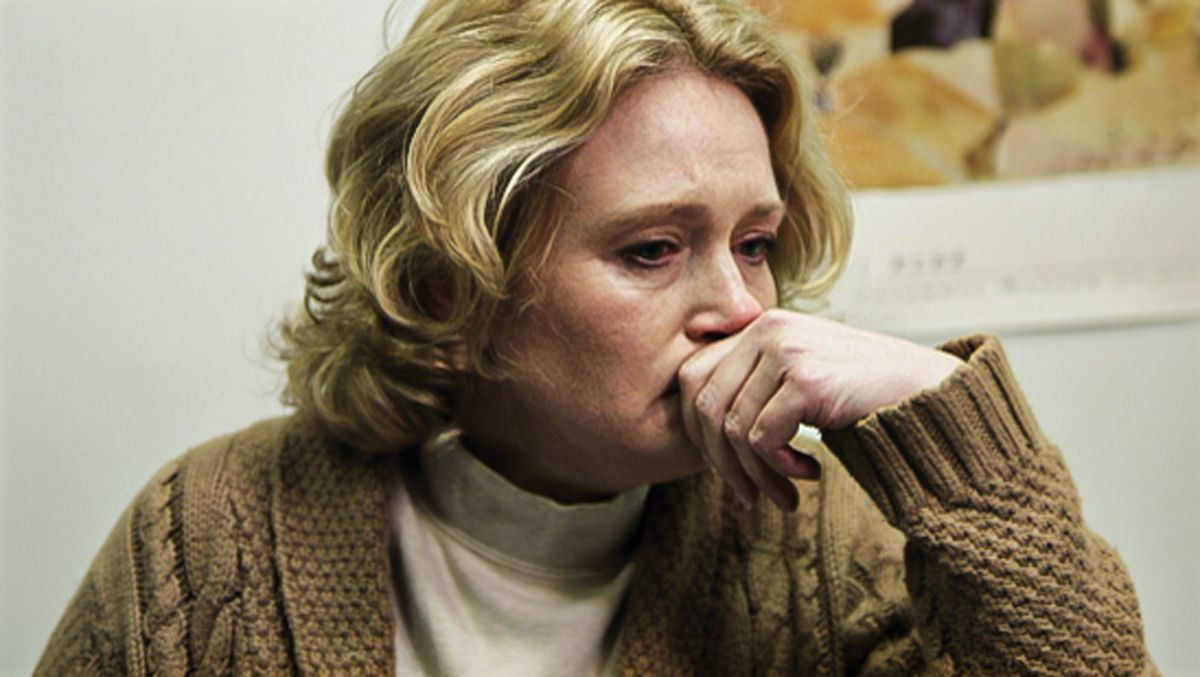
Autonomic behavior refers to those behaviors governed by the autonomic nervous system. This is the category of non-verbal communication that we have little or no control. It is very useful to learn to observe these behaviors, as they often indicate that a person is changing their internal state and having strong feelings towards things being said in the conversation or the nature of the visit (Figure 5). Facial color can shift from neutral to flushed or blanched, the conjunctivae of the eye can begin to glisten as an early sign of tearing, you can see sweating or feel it in a handshake, and you can notice whether a person is breathing high in the chest versus deeper in the belly – or actually holding their breath around a particular topic you might have brought up.
Exercise 3
- What do you notice about the client’s body posture and facial expressions?
- What are some assumptions that you are making about how she is feeling?
- What can you do or say to check out your assumptions?
[At the end of this section we’ll provide some answers to these questions]
Handling mixed messages
It is essential to read the overall pattern of non-verbal responses rather than a single sign as mixed responses are common. The first thing to pay attention to is when a client’s non-verbal communication is saying something different than what she is saying. This entails heightening awareness of non-verbal communication such as a client tearing up, breaking eye contact, looking at his watch, displaying emotions such as anger fear, confusion, helplessness, grief. The second step is to reflect back what you are seeing or believe to be going on for the client. A mixed message occurs when verbal and non-verbal channels do not match up. Some experts in non-verbal behavior talk about mixed messages as “non-verbal leakage” or “deception”. Quite often a mixed message means that somehow it is not safe enough for a client to tell the veterinarian what they are thinking or wanting and it very often involves a disagreement they have with the veterinarian in terms of her recommendation.
So what do we do about a mixed message? First and foremost set the stage for maximizing rapport through non-verbal cues starting with you and your practice. Ensure that every part of the clinic sends a message of invitation for clients and their children. Arrange clinic and exam room space to encourage comfort and ease for the client and patient.
Next, self assess your non-verbal communication starting with attention to vertical height difference. Are you towering over the client in an effort to look at the patient? What kind of interpersonal distance have you created to maximize rapport? Are you too close or too far away from the client to have a relaxed conversation? What kinds of barriers might distract from non-verbal rapport such as exam tables, facing a computer to input information? Pay attention to your tone of voice and the amount that you are talking compared to the client.
Now it is time to acknowledge the discrepancy in the client’s verbal and non-verbal communication with something like:
“Susan, while you’ve agreed that we should run some additional tests to help us figure out what is going on with Sadie, I sense that you are still a bit uncertain with this decision” [pause and let Susan respond]
Picking up client’s non-verbal cues, decoding them and most importantly checking that your interpretations of the non-verbal are correct is crucial to understanding client’s emotions and feelings.
The third step involves factoring in the client’s response into your next question or comment. For example, let’s assume that Susan responded to your question about whether she is uncertain about adhering to additional tests by saying:
“Yes, I am uncertain. We’ve already done a bunch of tests and we haven’t learned anything new about Sadie’s condition so I’m reluctant to spend any more money”.
How might you respond?
Take a moment to think about the words that you would use before you look at the possibility below.
A possibility might be:
“Thank you for letting me know your concern Susan. The 2 additional tests that I’m suggesting, impression smearing and skin scraping, are the next steps after the blood work that we’ve done. These tests will help us determine what is contributing to her itching and scratching.”
As you can see from the example above, the veterinarian has learned that Susan is upset and reluctant to spend more money just to hear that the vet practitioner still doesn’t know what’s wrong with the dog. She’s gone on to address Susan’s reluctance by providing a reason for why the two additional tests might help them to learn what is required to treat Sadie.
The importance of appropriate non-verbal behavior in developing rapport cannot be overemphasized. Picking up client’s non-verbal cues, decoding them and most importantly checking that our interpretations of the non-verbal are correct is crucial to understanding clients emotions, feelings and being able to move along in the conversation with a greater opportunity to make decisions in the best interest of the patient while addressing the client’s beliefs, expectations and needs.
Answers to the non-verbal communication exercises
References
- Bonvicini K. (2003) Bayer Animal Health Communication Project. It goes without saying. New Haven (CT): Institute for Healthcare Communication.

Miguel Ángel Díaz
DVM
Spain
Miguel received a degree in Veterinary Science in 1990. After working at several clinics he opened his own clinic in 1992 which grew from a two-person office to a 24/7 hospital with 17 employees. After running his hospital for 25 years, he handed it over to his team in 2017 in order to concentrate exclusively on his great passion: coaching.
Miguel is the director of the company New Way Coaching, aimed at helping veterinarians become better leaders. He has been educating and training veterinarians in Europe, Latin America, and Asia since 2009 in leadership, motivational techniques, effective communication, handling objections, conflict resolution, influence and persuasion. He spends his days giving individual coaching sessions, private training for his clients’ teams, and workshops and conferences for major veterinary sector companies.
Miguel is an International Coach Certified by the International Coaching Community and the Center for Executive Coaching (USA). He is a Certified Trainer for Edward de Bono’s Six Thinking Hats.
He has been an international speaker at conferences in over 10 countries on three continents. He is the author of the book “7 Keys to Successfully Running a Veterinary Practice”, which has been translated into English, Polish, Chinese and Italian.

Iván López Vásquez
DVMChile
Iván comes from a family of veterinarians; his father and older brother share the same passion. He obtained his degree from the Universidad de Concepción in 1991, worked a few years at a small clinic and then shifted his career towards sales and marketing, holding several positions at multinational companies in the domestic pet market in his native country.
Since 2008 he has been the executive director of Vetcoach, a business and organizational consulting company that specializes in the pet veterinary sector in Latin America, where his vision is to create “a new standard for the veterinary world”.
Iván has studied marketing, innovation, coaching and positive psychology. Today he is a strategic business consultant in organizational development and innovation, an ORA Coach (Organizational Role Analysis), creator of initiatives to improve the well-being (happiness) of veterinary students and qualified veterinarians, as well as high-value training programs for veterinary companies and their teams on subjects such as management, wellbeing, communication skills and positive leadership.
Iván has written several management articles for veterinary journals and is an international conference speaker in Latin America.

Cindy Adams
MSW, PhD
Canada
Cindy Adams is Professor in the Department of Veterinary Clinical and Diagnostic Sciences at the University of Calgary, Veterinary Medicine, where she developed and implemented the Clinical Communication Program in Calgary’s new veterinary school. She honed her professional understanding of human-animal relationships serving from 1980-1992 as a social worker in child welfare, women’s shelters and the justice system. Animals were frequently involved in that work. Combining the very different perspectives gained from her experiences in social work and a doctorate in veterinary epidemiology, she became a faculty member at the Ontario Veterinary College, University of Guelph (1996-2006). There she designed and directed the first veterinary communication curriculum in North America and pioneered a research program regarding communication in veterinary medicine.
She helped initiate the Institute for Healthcare Communication, Bayer veterinary communication project. Her research has focused on communication education, veterinary-client communication in large and small animal contexts, animal welfare, companion animal death and human grief. Founder of the International Conference on Communication in Veterinary Medicine, co-author of Skills for Communicating in Veterinary Medicine she has presented widely and advised veterinarians, veterinary practice teams and veterinary educators throughout North America, Europe, Australia and the Caribbean.

Antje Blattner
DVMGermany
Dr. Blaettner grew up in South Africa and Germany and graduated in 1988 after studying Veterinary Medicine in Berlin and Munich. She started and ran her own small animal practice before undertaking postgraduate training and coaching course at the University of Linz, Austria and then founded “Vetkom”. The company provides training to veterinarians and veterinary nurses in practice management in subjects such as customer communication, marketing and other management topics. Dr. Blaettner also is editor for two professional journals, “Teamkonkret” (for veterinary nurses) and “Veterinärspiegel” (for veterinarians).