Introduction
You finish performing the ultrasound scan, smile at the client and say “Congratulations! She’s pregnant.” This scene could occur in any veterinary clinic, but as you hang up your ultrasound probe, remember: the consultation is far from over. In fact, a new – and very important – conversation with the owner is about to begin. Part of it will focus on canine neonatology, and how to properly care for newborn puppies, and a useful mantra is “An ounce of prevention is worth a pound of cure”. During the discussion, milk replacers are an important factor to include in the topics covered – and in fact milk replacers should be part of any maternity “toolkit” – but various questions arise at this point. Which one to pick? What are the important factors to check? What are the best ways to use them and when should they be used? This article will aim to answer all these questions and allow the veterinarian to feel comfortable advising owners in the clinic.
What’s the best milk replacement for puppies?
Look for nutritional adequacy
Many owners assume that any milk will be suitable for newborn puppies. The milk in their fridge, a human baby milk replacer bought at the local grocery store, a home-made formula using a recipe found on the Internet… those are options that will often be considered if the owner has not been properly briefed. It is therefore important to let them know that their bitch’s milk is very specific. This is because canine milk, when compared to other species, is more energy dense, has higher levels of minerals (e.g., calcium and phosphorus) and contains more protein (Table 1). It is obvious that cow’s milk or goat’s milk (the latter being an Internet favorite) are quite different in composition, and they do not offer the proper nutritional balance to sustain healthy growth in newborn puppies.
Table 1. Average composition of dog, cow and goat milk.
| Dog (from [2]) |
Cow (adapted from [3]) |
Goat (adapted from [3]) |
|
| Energy (kcal/L) | 1560 | 630 | 710 |
| Proteins (g/Mcal) | 56.7 | 21.8 | 46 |
| Calcium g/Mcal | 2.13 | 0.55 | 1.7 |
| Phosphorus g/Mcal | 1.37 | 0.48 | 1.46 |
|
Lactose (g/Mcal)
|
20 | 28.8 | 57.7 |
Osmolality is vital
Osmolality refers to the osmotic pressure produced by dissolved particles in the milk. A large quantity of highly osmolar particles in the digestive tract of the newborn can induce osmotic diarrhea, and since a puppy’s body is 84% water [4] it is important that this is avoided, and especially during the neonatal period. Lactose will affect milk’s osmolality, and given its high levels in cow or goat milk when compared to the bitch, this is another reason why it is better to avoid such options for newborn puppies.
The preferred option
Nowadays dedicated canine milk replacers are widely available, and they should always be the preferred option. Obviously, it is important that their composition is as close as possible to the typical composition of the bitch’s milk, although some reports indicate that this is not always the case with certain products [2] [5], so veterinarians would be prudent to check this if there is any doubt. Some milk replacers may also contain several “optional” constituents, as shown in Table 2, but most dedicated canine milk replacers are satisfactory and offer both convenience and peace of mind, and their use should always be recommended in newborn puppies. Many markets now offer two options for canine milk replacers, either liquid or powder-based products, and both have their pros and cons.
Table 2. Other possible components in canine milk replacers.
| Component | Why consider? |
| DHA (docosahexaenoic acid) | Several milk replacers are enriched with the omega-3 fatty acid DHA. The bitch has a limited capacity to produce this nutrient during lactation [7], and supplementation in newborn puppies has been shown to support development of cognitive and ocular functions [8]. |
| Prebiotics | Prebiotics such as fructo-oligosaccharide (FOS) are found in some milk formulas. They help support the newborn’s digestive function as well as participate in the development of immune health by helping to establish and maintain an optimal microbiota balance [9]. |
| Maltodextrin | Maltodextrin is an oligosaccharide that is used in milk formulas for pre-term infants. In a recent study a puppy milk replacer was supplemented with this ingredient to provide extra energy to newborn pups [10]. Administering the supplement immediately after birth helped support the early growth rate and aided maintenance of body temperature, and also reduced the number of puppies at risk for neonatal mortality. |
| Immunoglobulin Y (IgY) | IgY supplementation in newborns has been demonstrated to support neonatal growth. In large breed puppies it has also been shown to aid positive development of the microbiota [11]. |
Liquid milk replacers are clearly easier to use: because they come ready-mixed, no preparation is necessary, and simply require warming up before being administered. They also avoid the most common mistake seen when using a powder-based product, which is that owners tend to either add too much water (so that the product is too dilute) or insufficient water (so that the product is too concentrated) [6]. However, once opened, liquid replacements should not be stored in a refrigerator for long, and the usual recommendation should be to discard them at a maximum of 72 hours.
Powdered milk replacers, on the other hand, can be stored for much longer – typically a month once opened. As mentioned above, reconstitution mistakes can and do occur, which will impact on the osmolality of the milk, resulting in either diarrhea or constipation in the newborn. However, powder-base products offer the option of varying the osmolality of the solution in order to address some nutrition-induced conditions, as discussed below.
When do newborn puppies need a milk replacer?
Conditions related to the mother
Availability & behavior
There will be times when an owner will have to rely on a milk replacer to ensure neonatal puppies are properly fed. In some cases, newborn puppies may have no mother – for example, following an accident, or an anesthetic problem during a caesarean section. Whilst not frequent, such scenarios are unpredictable, and when they occur, they obviously prevent the usual maternal nursing. The other situation is where orphaned newborn puppies are abandoned at an animal shelter. While these places typically deal more with orphaned kittens, they will sometimes see orphaned puppies too, and staff and foster parents at these establishments need to be equipped with an appropriate milk replacer. It is also important not to overlook the risks from poor maternal behavior; some mothers neglect their puppies, whilst others can be aggressive towards them. Primiparous bitches are more prone to this [12]) and the problem may be seen more frequently in certain breeds (e.g., English Bull Terriers) [13]. Owners should be aware of this risk to help them better anticipate the situation.
Lactation-related disorders
Whilst the use of milk replacers is mandatory if the dam suffers from agalactia, the situation is less clear cut when it comes to the most common lactation disorder encountered in canines, namely acute mastitis. This typically occurs either immediately after parturition, or at around three weeks postpartum, when lactation is at its peak [14]. Clinical signs involve inflammation of one or more mammary glands, often accompanied by a change in milk color, usually to a yellowish-brown appearance. More general signs – lethargy, pyrexia, discomfort when puppies are suckling – may also be observed but are not always present. It is therefore important to recommend that an owner checks the dam’s mammary glands daily. Mastitis can have a major impact on newborn puppies, leading to failure to thrive, neonatal diarrhea and/or colitis. Treatment of acute mastitis involves antibiotics, with cephalosporins often used as first-line treatment [15]. However, opinions differ on what to do with the puppies. Some authors recommend that pups can continue to suckle the mother during treatment (as long as there is no discomfort for the dam) and will prevent galactostasis – which has a negative impact on treatment efficacy. Antibiotics are also excreted in the milk, which may offer the puppies some protection from the side effects of the mastitis (although there is always the risk of dysbiosis and neonatal diarrhea, so the clinician should judge each situation on its merits). However, other authors recommend that the whole litter should be immediately switched to a milk replacer while the mastitis is treated, the reasoning being that newborn puppies are fragile and can crash quickly, and that consumption of contaminated milk may increase the risk. To prevent galactostasis in the mother, lactation can be stopped by using dopaminergic drugs such as cabergoline [16].
Both options have their pros and cons, and it is the author’s opinion that the decision must always be taken with the health of the newborns as a priority. Above all, if the puppies develop signs of ill-health, they should not be allowed to nurse on the mother and should be switched onto a milk replacer immediately.
It is also important to be aware of “toxic milk syndrome” which is described in several canine neonatology textbooks. This is where some puppies from a litter develop neonatal diarrhea or colitis, although the dam shows no clinical signs of mastitis. Affected pups fail to thrive and suffer from abdominal pain after feeding, although sometimes only one puppy in the litter will exhibit clinical signs whilst the others remain well. Recent studies suggest that this could be related to subclinical mastitis [17], which (although not routinely done in veterinary clinics) can be diagnosed via microscopic examination of the milk, looking for increased numbers of neutrophils per high power field. Subclinical mastitis should always be a differential diagnosis when a neonate is unwell, even if only one puppy in a litter is exhibiting clinical signs. If seen, the puppy should immediately be moved onto a milk replacer, and if other puppies start to develop the same signs it would be advisable to switch the entire litter onto the milk product.
Emmanuel Fontaine
Conditions related to the newborn
Cleft palate
As soon as a puppy is born and properly resuscitated, it should be checked for a cleft palate – one of the most common congenital abnormalities encountered in newborn puppies [18]. In some cases, there is the option to repair the defect via a palatoplasty, but this surgery can only be performed at a later date, usually between 2.5-14 months of age (depending on various factors and the surgeon’s preference). However, during the neonatal period, affected puppies cannot suckle and will aspirate the milk. This may cause them to choke, or can lead to bronchopneumonia, which is often fatal. These risks decrease when the puppy starts eating solid food, so (assuming the owners wish to consider surgery at a later date) early weaning at 3 weeks of age can be considered. However, for the first three weeks of life tube-feeding with an adapted canine milk replacer will be mandatory to avoid complications.
Risk of neonatal mortality
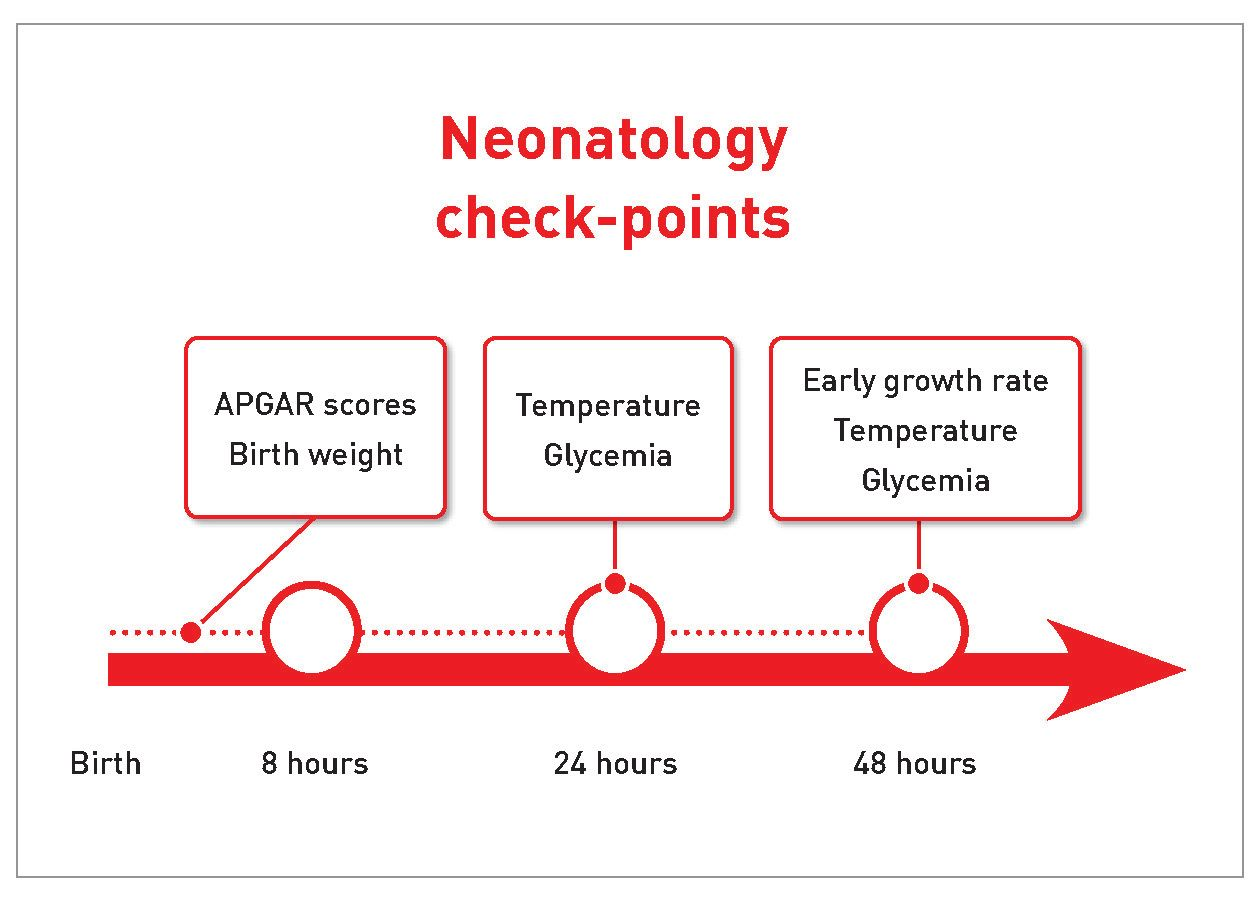
Recent studies [19] have helped define guidelines for early detection of newborn puppies at risk of neonatal mortality (Figure 1) and owners must be alerted to this. These studies have shown that at-risk puppies will benefit from energy supplementation, and so such individuals should be offered an appropriate milk replacer when identified. Growth curves are also starting to become available for dog breeders and veterinarians [20] [21] which will assist in monitoring the growth of puppies during the neonatal period. These can help in early identification of potential problems, as a lack of weight gain is often one of the first indicators of poor health. Nutritional supplementation via a milk replacer is certainly an option in these cases.
Heterogenous litters
“Litter heterogeneity” refers to the weight difference seen between the biggest and smallest puppies in a litter. This has recently been identified as a risk factor for early neonatal mortality [21]. When high litter heterogeneity is detected (e.g., a weight difference between 9.9-16.8%, depending on the breed), the litter should be flagged as being potentially at risk. This is also a reminder that, in neonatology, the litter should always be considered in its entirety. The difference in weight will accentuate competition for accessing the mammary glands, and supplementation with a milk replacer should help minimize the deleterious effects of the heterogeneity.
Other reasons
Weaning
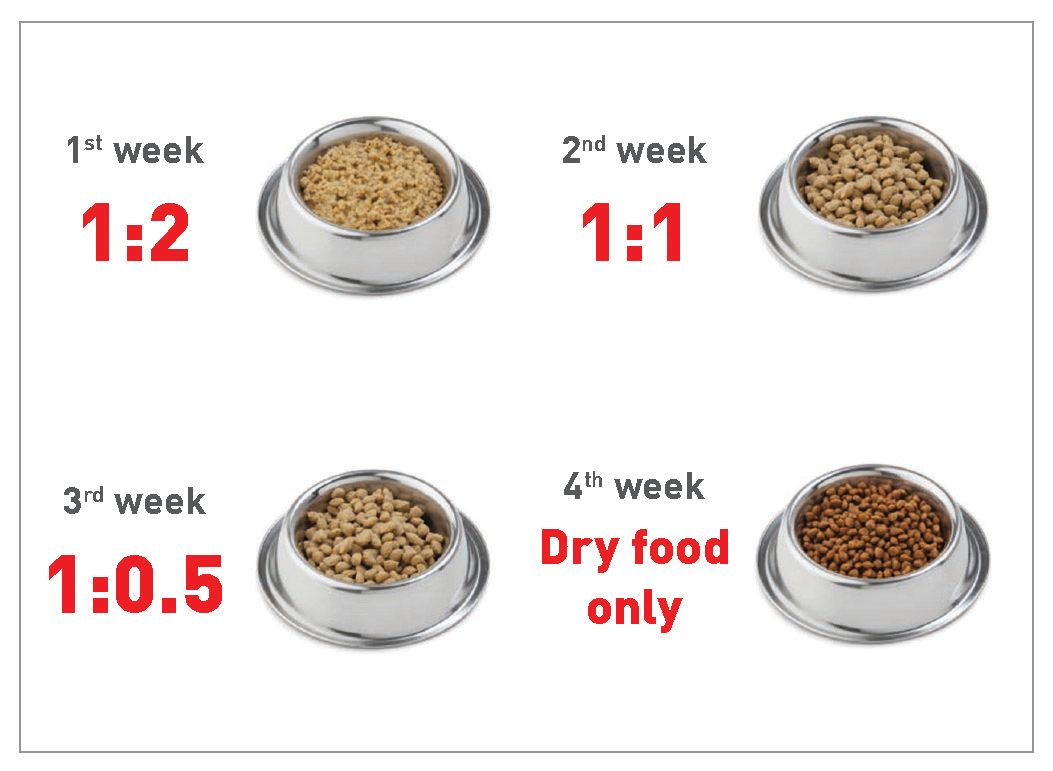
At weaning, which typically starts around 4-4.5 weeks of age, it is recommended that the transition from milk to solid food is as smooth as possible. If using kibble, it should be rehydrated during the first few weeks of weaning to make it easier for the puppies to ingest and digest the food [22] (Figure 2), and, in the author’s opinion, a milk replacer can be used instead of water during the first week to ease this transition.
Immunoglobulin supplementation
Over 18% of newborn puppies do not receive enough immunoglobulins from their dam’s colostrum [19], and these individuals have been identified as being at risk for neonatal mortality, so milk replacers that contain Immunoglobulin Y (IgY) are a potentially useful option here. IgY will be taken up from a puppy’s digestive tract during the period when colostrum is absorbed [24] so even though the IgY in those milk replacers currently only target a limited number of pathogens, their use immediately after birth makes sense to ensure that puppies receive at least a degree of protection against some of the most common digestive canine pathogens.
How should milk replacers be used?
Check the puppy’s temperature first
Before a milk replacer is fed to newborn puppies, whether they are debilitated or not, it is essential to check their body temperature. During the first week of life, the newborn’s body temperature is between 35.5-36.5oC. It will only reach adult body temperature three weeks after birth [25], but if a puppy’s temperature drops below 34oC the digestive tract goes into stasis, preventing digestion of food, so that administration of milk will lead to bloating and abdominal discomfort. This is a common mistake, especially encountered with orphaned pups; owners often think that the priority is to bottle-feed them, but neglect to first check their body temperature to ensure it is safe to do so. Puppies cannot thermoregulate during the first three weeks of life, so if hypothermia develops, they must be warmed up before being bottle-fed. Infrared lamps, heating pads, water bottles or incubators are all options to be considered, but the warming process should be gradual, taking at least an hour before starting the bottle feed.
Owners should also be advised that it is important to optimize the temperature inside the nest in order to prevent hypothermia and its consequences. The author recommends 30oC inside the nest during the first week after birth, 28oC for the second week and 25oC for the third week. After this period puppies will be able to thermoregulate, and hypothermia is less of a concern.
Follow the instructions
As mentioned above, reconstitution errors are the most common mistake encountered when preparing powder-based milk replacers. It is therefore important to discuss this with the owner and to emphasize what often seems a trivial detail – it is essential to use the ratio of water to milk powder that is recommended by the manufacturer. It is also important to remind owners that “more is not better”, as they may think that mixing the powder with another type of milk (goat’s milk for instance) will lead to a more nutrient-dense solution which is beneficial to the newborn. Unfortunately, this again can dramatically impact the osmolality of the solution and lead to neonatal digestive disorders.
Bottle-feeding or tube feeding?
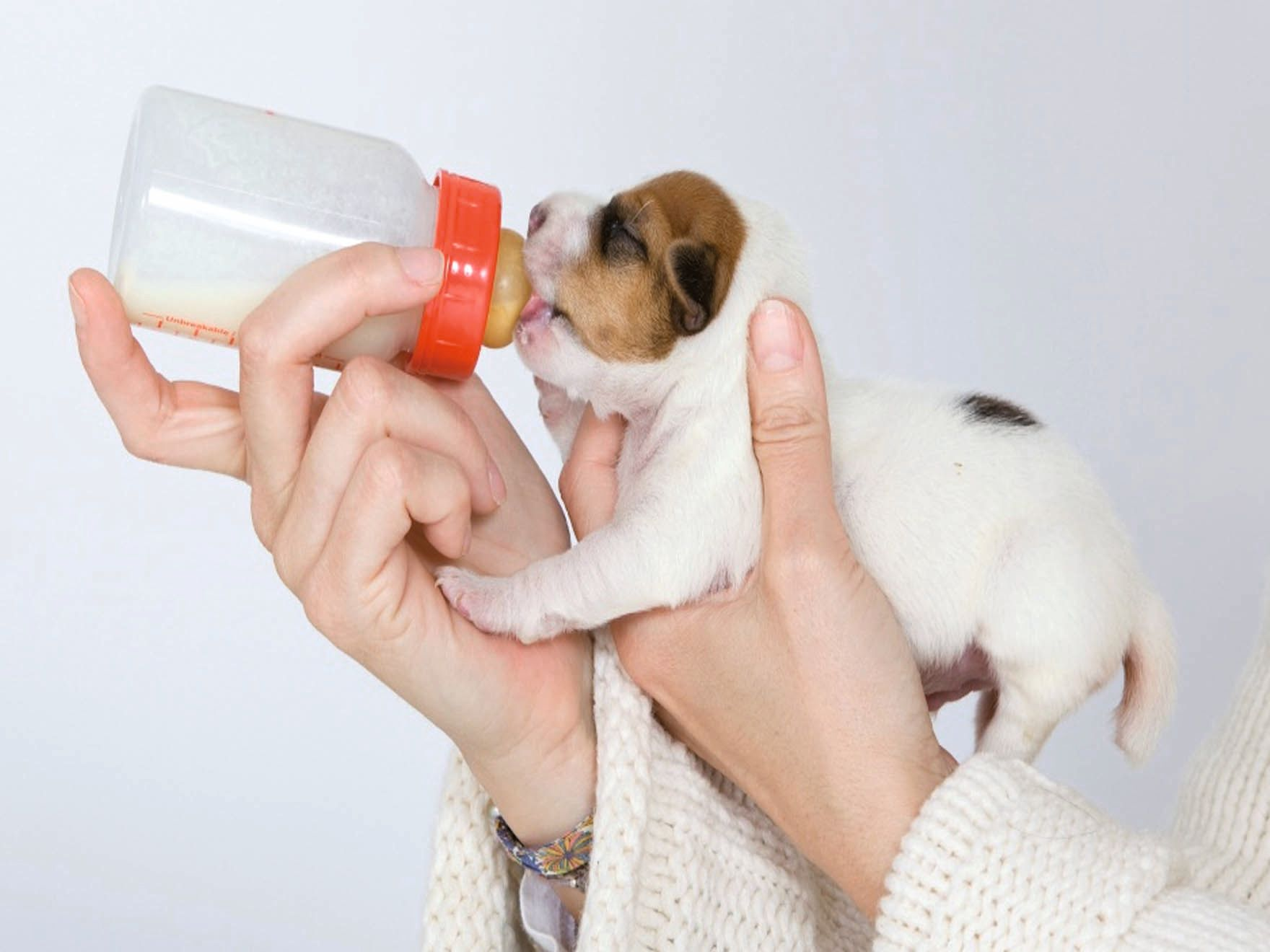
When feeding newborns with a milk replacer, bottle-feeding and tube-feeding are the only two options. The author believes that, whenever possible, bottle-feeding is to be preferred. Specific puppy bottles should be used, as they come with adapted nipples which ensure optimal milk flow during feeding. This is an important detail: if the milk flow is too fast (e.g., if using human bottles on small breed newborn puppies), aspiration can occur. The author also prefers to use a bottle with pre-prepared nipples; some are supplied with nipples which requires the tip to be cut before use, but if not done properly, this can again lead to an over-fast delivery of milk with the same unwanted consequences. It is also very important to discuss how to hold the puppy and bottle for feeding, as an owner will often think that puppies should be bottle-fed the same way as a human baby; this is wrong and can again lead to aspiration. Figure 3 shows the correct position for bottle feeding a puppy.
Tube-feeding, on the other hand, should be reserved for puppies too weak to be bottle-fed or for those born with a cleft palate; it should not be employed simply in order to feed an entire healthy litter faster. It is important to note that tube-feeding should only be a temporary solution (other than with a cleft palate case); as soon as the puppy is strong enough, it should be moved to bottle-feeding or feeding from the mother, depending on the options available.
Clients must also be reminded that newborn puppies cannot defecate or urinate by themselves. This is a reflex action stimulated by the mother licking the puppy’s perineal region, so after each feeding session the owner should simulate this by rubbing the perineal area with gauze moistened with lukewarm water.
How many meals per day?
When feeding newborn puppies with a milk replacer, the author recommends 8 meals per day during the first week after birth, 6 meals per day in the second week, and 4 meals per day in the third week. It is also important to note that individuals in a litter of orphaned puppies may start suckling on each other, to the point where severe inflammation and even abscesses develop. This behavior is usually seen when the puppies are hungry. However, increasing the amount fed could increase the risk of neonatal diarrhea because of the neonate’s limited digestive capacity, so one practical option is simply to increase the number of meals given. For instance, during first week of life, instead of 8 meals per day, moving to 10 can be recommended. The author has successfully implemented this approach in animal shelters, and while obviously more time-consuming, it is perhaps the simplest answer to the problem.How much milk per meal?
By default, when a newborn’s nutrition solely depends on the milk replacer, clients should be advised to follow the manufacturer’s recommendations, although the development of neonatal growth curves will help tailor this advice. Recent research has also shown that for puppies which are nursing on the mother but are identified as at risk for neonatal mortality, supplemental milk replacers can be given ad lib [19]. The authors of this study did not experience any complications with this protocol, and found that the puppies would almost self-regulate their milk intake. That said, it would always be wise to recommend caution here – some voracious puppies might over-consume, which could lead to diarrhea – and the author has observed this on occasion, especially with Labrador Retrievers. It would therefore be prudent to recommend that an owner does not allow puppies to exceed the maximum volume recommended by the manufacturer.Clinical tip: play with the dilutions
Veterinarians should be aware that – as in the human situation – the water: milk powder ratio for powder-based milk replacers can be altered on occasions to their advantage. Varying the product’s osmolality can come in handy when dealing with cases of uncomplicated neonatal diarrhea or constipation (i.e., when nutrition-related [26]). From personal experience, the author prefers to use 80% of the recommended volume of water to prepare the product for a puppy with constipation, whereas for diarrhea it is recommended to use 120% of the recommended water volume. In either case reverting to normal ration can done as soon as the clinical signs resolve.Conclusion
Milk replacers must be part of every neonatology toolkit. Every client who has a pregnant bitch should be equipped with the correct milk replacer, and it is important to educate them on how to avoid some of the most common mistakes encountered. There are plenty of situations where milk replacers will come in handy, and when used properly, they are a great asset in optimizing the health of newborn puppies.

Emmanuel Fontaine
DVM, MSc, PhD, Dip. ECAR
Dr. Fontaine graduated from Toulouse Veterinary School in 2004 and continued his studies at the Alfort Veterinary School, Paris in the domestic carnivore unit of the Reproduction Department. From 2005 to 2011 he worked at the Centre d’Étude en Reproduction des Carnivores [Research Center for Reproduction in Carnivores], a unit specializing in pet breeding. Dr Fontaine completed his PhD in 2012 on the use of GnRH agonists in canines, and also holds a diploma from the European College for Animal Reproduction (ECAR). He joined Royal Canin in 2011 as Technical Services Veterinarian for the PRO team, and is currently in charge of Regional Scientific Communication for the Americas.
References
- Fahley GC Jr., Barry KA, Swanson KS. Age-related changes in nutrient utilization by companion animals. Annu. Rev. Nutr. 2008;28:425-445.
- Boutigny L, Grellet A, Feugier C, et al. Effect of energy supplementation between birth and 3 weeks on growth rate in puppies. In Proceedings, 19th Congress European Society of Veterinary and Comparative Nutrition (ESVCN) 2016, Berlin, Germany.
- Mila H, Grellet A, Mariani C, et al. Natural and artificial hyperimmune solutions: Impact on health in puppies. Reprod. Domest. Anim. 2017;52(S2):163-169.
- Santos NR, Beck A, Fontbonne A. A review of maternal behaviour in dogs and potential areas for further research. J. Small Anim. Pract. 2019;61(2):85-92.
- Holmes SP, Memon MA, Fite CL. Theriogenology Question of the Month. J. Am. Vet. Med. Assoc. 2009;234:205-207.
- Lection J, Cornelius AJ, Moxon R, et al. Incidence and risk factors for canine mastitis and metritis in two guide dog populations. Anim. Reprod. Sci. 2021;231:106802 DOI: 10.1016/j.anireprosci.2021.106802
- Vasiu I, Dabrowski R. Lactation-related mammary gland pathologies – a neglected emergency in the bitch. Reprod. Dom. Anim. 2021;56(2):208-230.
- Marti JA, Fernandez S. Clinical approach to mammary gland disease. In; BSAVA Manual of Canine and Feline Reproduction and Neonatology. Gloucester, British Small Animal Veterinary Association 2010;155-165.
- Kaszak I, Ruszczak A, Kanafa S, et al. New insights of canine mastitis – a review. Anim. Sci. Pap. Rep. 2018;1:33-44.
- Domoslawska A, Jurczak A, Janowski T. Oral folic acid supplementation decreases palate and/or lip cleft occurrence in Pug and Chihuahua puppies and elevates folic acid blood levels in pregnant bitches. Pol. J. Vet. Sci. 2013;16(1):33-37.
- Chastant-Maillard S, Mila H, Grellet A, et al. Neocare – 5 years of science to improve the health of newborn puppies. Royal Canin SAS, News From Research 2016;41.
- Heinze CR, Freeman LM, Martin CR, et al. Comparison of the nutrient composition of commercial dog milk replacers with that of dog milk. J. Am. Vet. Med. Assoc. 2014;244(12):1413-1422.
- Alves I. A model of puppy growth during the first three weeks. Vet. Med. Sci. 2020;6(4):946-957.
- Lecarpentier M, Martinez C. La croissance du chiot entre 0 et 2 mois : établissement de courbes de croissance de référence par race. Thèse d’exercice vétérinaire, École Nationale Vétérinaire de Toulouse, ENVT 2017;274.
- Fontaine E. Food intake and nutrition during pregnancy, lactation and weaning in the dam and offspring. Reprod. Dom. Anim. 2012;47(S6):326-330.
- Mugnier A, Mila H, Guiraud F, et al. Birth weight as a risk factor for neonatal mortality: Breed specific approach to identify at-risk puppies. Prev. Vet. Med. 2019;171:104746.
- van Nguyen S, Umeda K, Yokoyama H, et al. Passive protection of dogs against clinical disease due to canine parvovirus-2 by specific antibody from chicken egg yolk. Can. J. Vet. Res. 2006;70(1):62-64.
- Reyes-Sotelo B, Mota-Rojas D, Martinez-Burnes J, et al. Thermal homeostasis in the newborn puppy: behavioral and physiological responses. J. Anim. Behav. Biometeorol. 2021;9(3):2112.
- Victora CG, Bryce J, Fontaine O, et al. Reducing deaths from diarrhoea through oral rehydration therapy. Bull. World Health Organ. 2000;78(10):1246-1255.
- Prosser CG. Compositional and functional characteristics of goat milk and relieve as a base for infant formula. J. Food Sci. 2021;86(2):257-265.
- Indrebø A, Trangerund C, Moe L. Canine neonatal mortality in four large breeds. Acta Vet. Scand. 2007;49:S2.
- Corbee RJ, Tryfonidou MA, Beckers IP, et al. Composition and use of puppy milk replacers in German Shepherd puppies in the Netherlands. J. Anim. Physiol. Nutr. (Berl.) 2012;96(3):395-402.
- Renfrew MJ, Ansell P, Macleod KL. Formula feed preparation: helping reduce the risks, a systematic review. Arch. Dis. Child Educ. Pract. Ed. 2003;88:855-858.
- Greco DS. Pediatric nutrition. Vet. Clin. North Am. Small Anim. Pract. 2014;44:265-273.
- Beynen AC. Brain food for puppies. Creature Companion 2017;10:36-38.
- Czarnecki-Maulden GL. Effect of dietary modulation of intestinal microbiota on reproduction and early growth. Theriogenology 2008;70(3):286-290.