Pain is an unpleasant personal emotional experience. It has 3 dimensions [1]:
- Sensory – discriminative (location, intensity, quality, duration).
- Motivational – affective (describes the unpleasantness – how the pain makes us feel).
- Cognitive – evaluative (influence of cognitive activities on the pain experience).
The conscious perception of pain is the final product of a complex neurologic information-processing system, resulting from the interplay of facilitatory and inhibitory pathways throughout the peripheral and central nervous systems. Adaptive “physiological” pain (e.g., stubbing a toe) serves the vital purpose of rapidly altering behavior in order to avoid damage or minimize further damage, but maladaptive “clinical” pain represents malfunction of neurologic transmission and serves no physiological purpose. Poorly controlled acute pain leads to discomfort and suffering, as well as other unwanted consequences that can delay or impair recovery. Uncontrolled post-operative pain can lead to delayed healing, increased morbidity and the risk of developing chronic persistent pain which is very difficult to treat, so “prevention is better than cure”. Effective pain management must include properly conducted pain assessment carried out routinely and regularly throughout the post-operative period, as well as before and after analgesic administration to assess its effect.
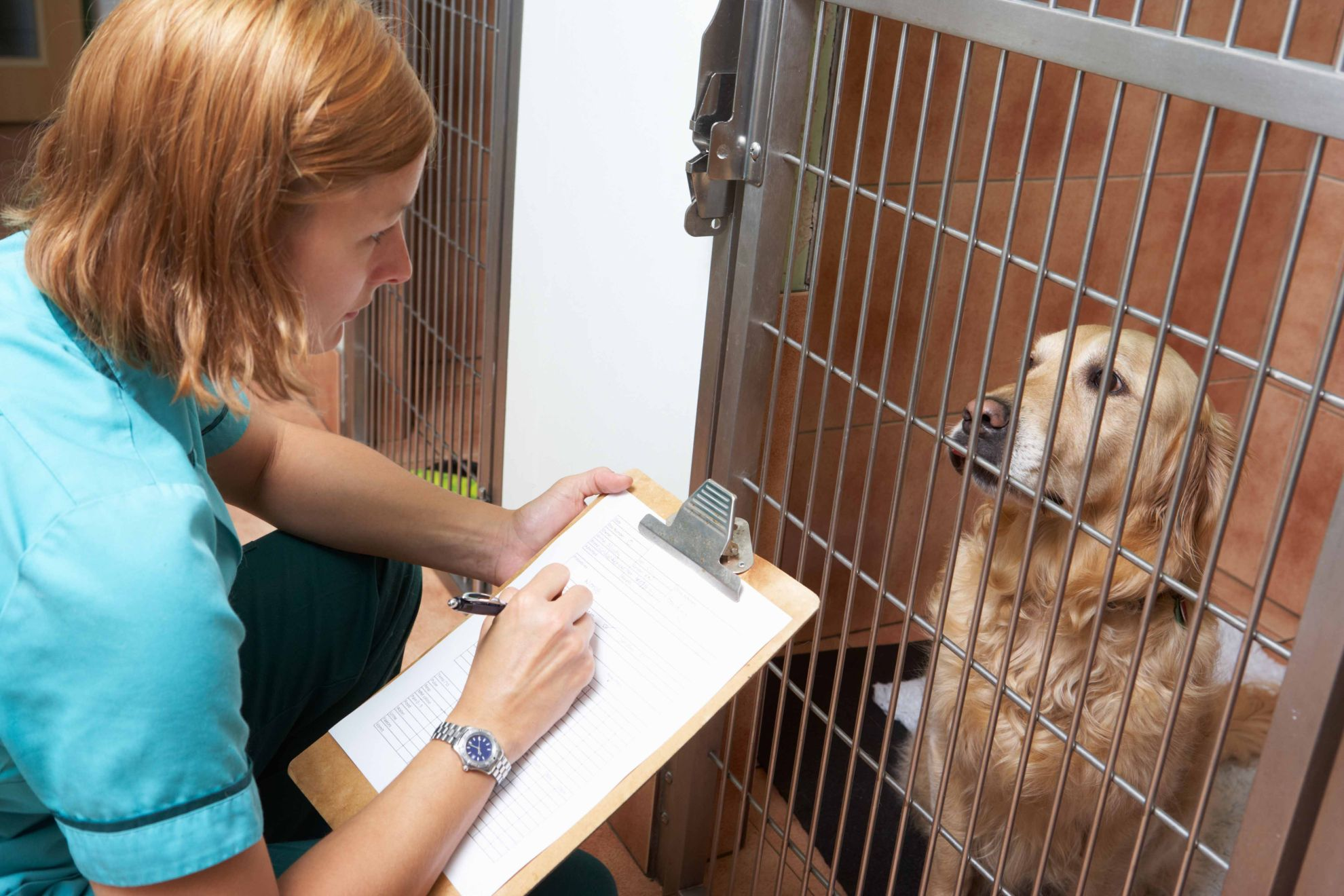
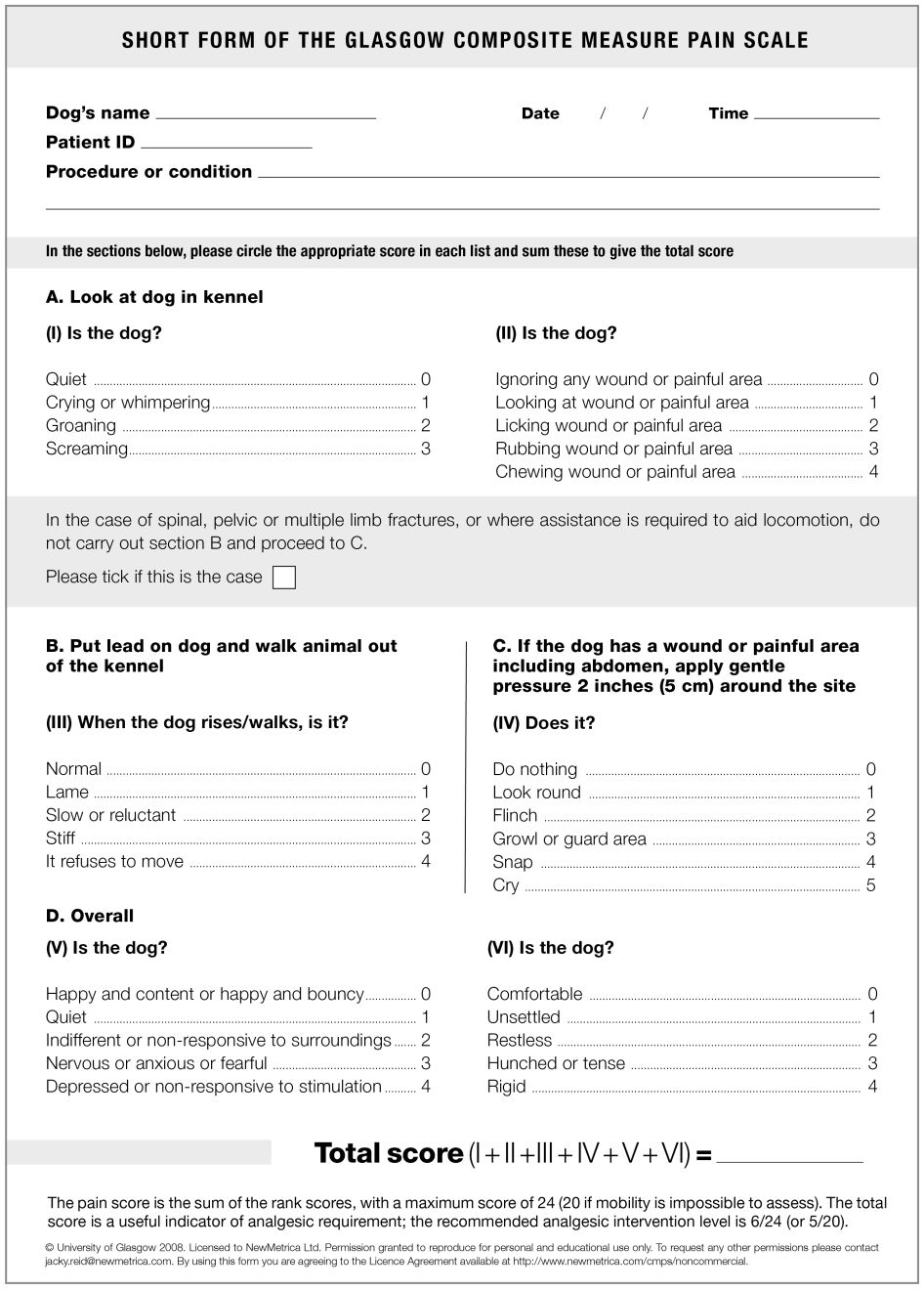
The short form of the Glasgow Composite Measure Pain Scale (CMPS-SF) was designed as a practical decision-making tool for dogs in acute pain, and can be applied quickly and reliably in a clinical setting. There are 30 descriptor options within 6 behavioral categories, including mobility. Within each category, the descriptors are ranked numerically according to their associated pain severity; the person carrying out the assessment chooses the descriptor which best fits the dog’s behavior/condition. It is important to carry out the assessment procedure as detailed overleaf.
The pain score is the sum of the rank scores, with a maximum score of 24 (20 if mobility is impossible to assess). The total score is a useful indicator of analgesic requirement; the recommended analgesic intervention level is 6/24 (or 5/20). Note that the scale should be used only once dogs are fully conscious and ambulatory without assistance (except where mobility is contraindicated), so typically wait 2 hours after endotracheal extubation before assessment, but each case should be treated according to its individual circumstances. Because the protocol involves palpation around the surgical wound and a mobility assessment (unless contraindicated) it is recommended that scoring is not carried out more frequently than hourly in the early post-operative period to avoid unnecessary stress to the animal and to limit the deleterious effect frequent disturbance might have on subsequent measurements.
- Evaluate the dog once it has recovered sufficiently from anesthesia (as scores can be affected by the hangover effect of sedative and anesthetic drugs).
- If pain scores are greater than 5/20 or 6/24, consider giving analgesia.
- Allow the analgesic to take effect and reassess after an hour; if the score has decreased to below the intervention level, reassess in 2 hours. If not consider additional analgesia.
- Thereafter assess every 3-4 hours or earlier as appropriate (depending on the severity of the surgical procedure and the class/route of administration/expected duration of analgesic administered) and after each analgesic administration.
- The scale is intended to be an adjunct to clinical judgment, and no animal should be denied analgesia on the basis of the scores alone.
References
- Melzack R, Casey KL. Sensory, motivational and central control determinants of chronic pain: A new conceptual model. In: Kenshalo, DL (ed). The Skin Senses. Springfield, Illinois. Thomas;1968;423-443.

Jacqueline Reid
BVMS, PhD, DVA, Dip. ECVAA, MRCA, MRCVS
Professor Reid graduated from the University of Glasgow and after a number of years in small animal practice returned there to specialize in veterinary anesthesia. Her research interests are the assessment of pain and quality of life in non-verbal species which led to the development of the Glasgow composite measure acute pain scales for dogs and cats. She is currently an Honorary Senior Research Fellow at the University and also CEO of NewMetrica, a company specializing in the development of instruments to measure pain and health-related quality of life in non-verbal species.